
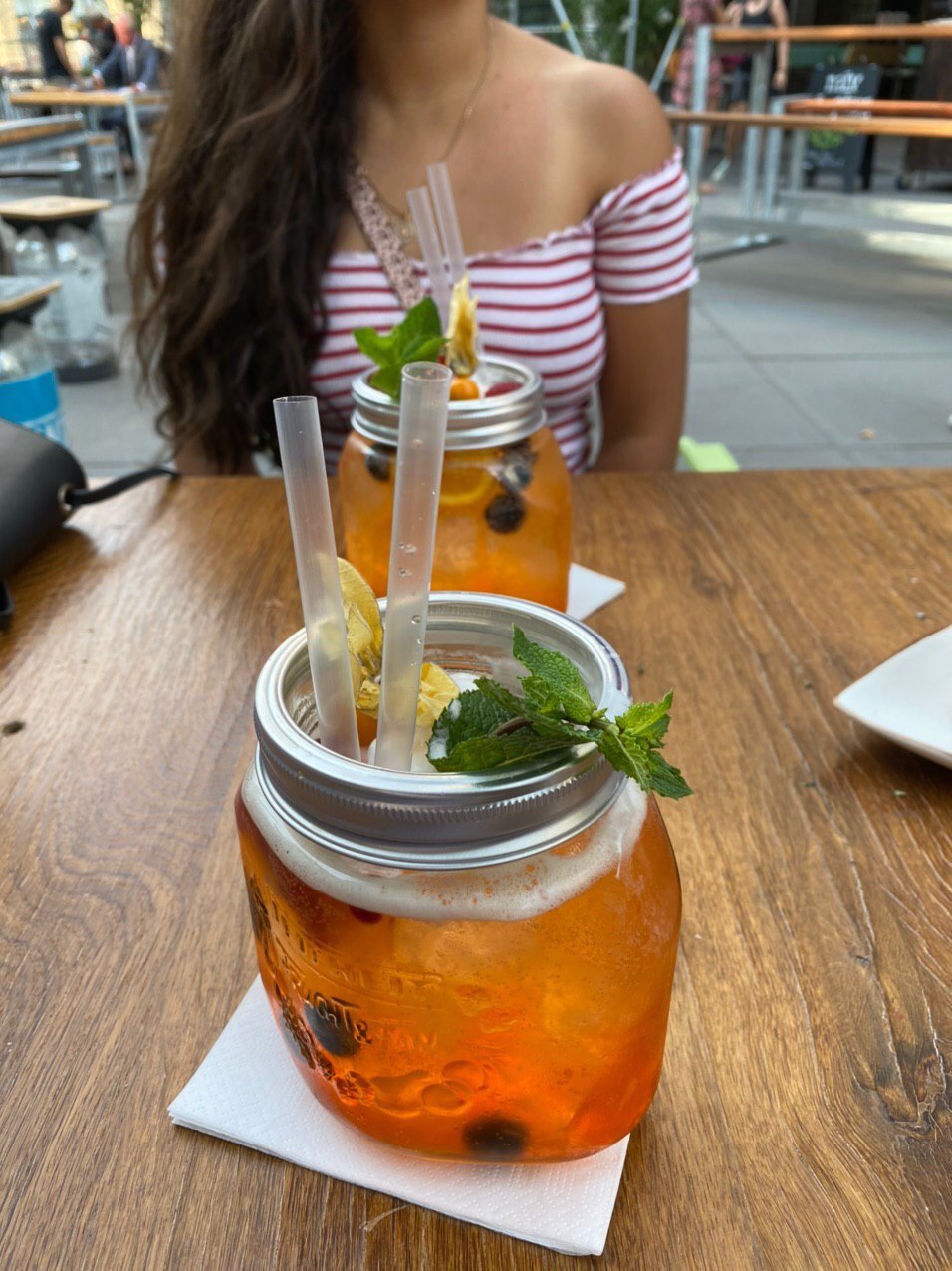
I'm a simple emigrant and I don't drink much
One can talk endlessly about alcohol in Germany, and a story about Germans' attitude to drinking could be longer than War and Peace. But why talk? It's much more effective to taste. Moreover, bars are on every corner here, and in supermarkets they hardly ask for age. Hardly—that's because in six years I was asked once, and by feel it was the only case in the history of Frankfurt. This might seem surprising, but the story about alcohol in Hesse I will begin with wine. It is precisely in the Rheingau region that wines of the highest quality are produced, white wine in particular is especially good. The grape varieties grown here are considered late-ripening, the harvest falls in mid-autumn. Local winemaking traditions go back to the Middle Ages, and the Institute of Viticulture and Enology has no equal in the world. A bottle of wine 0.75 L "for everyday" will cost 3–5 €, for special occasions — about 17 €. Apfelwein or cider. Another reason for pride of this land. Every year more than 40 million liters of this drink are produced! Here it is called apple wine and has been drunk since the 16th century. Locals claim that Apfelwein is almost a medicine. "Drink Apfelwein every day, you’ll become healthier," says a German proverb. A 0.5 L glass in a good bar will cost 3–4 €. A one-liter bottle in a store ~2.5 €. Sekt. This is the local equivalent of champagne. Since the 19th century, in Wiesbaden they produce more than 80 million bottles a year. In Germany, sparkling wine is consumed more than in any other European country. For 0.75 L of good Sekt you will pay only 5–8 €. Himbeerbrand or raspberry brandy is already a drink for gentlemen. Previously it was produced only in patented 0.35 L bottles, each of which consumed 24(!) kg of selected raspberries. Now there are 0.5 and liter bottles as well. Himbeerbrand constantly receives awards as the best strong spirit of Germany. This 48% ABV drink will cost you 90–100 € per liter. Also in the bars of Frankfurt, Mispelchen is very popular, but it's hard to call it a Hessian drink, because this is French brandy Calvados with pickled medlar fruit on a toothpick. Don’t panic, I’ll show what it is in the comments. Such a shot in a bar or restaurant costs 4–5 €. And finally, beer. Surprisingly, Germans drink less beer year after year. Nevertheless, in 2024 breweries sold 8.3 billion liters of beer. Non-alcoholic beer isn’t counted here. The best breweries are concentrated in Bavaria, so I’ll simply say that varieties and kinds of this drink are abundant here. A good beer in a bar will cost around 3–4 € for 0.5 L, and in a supermarket you can easily find it for 90 cents. One of the most popular cocktails in Germany is Aperol Spritz, and among strong drinks, of course, Jägermeister is not to be denied. It's a pity that it isn’t produced in Hesse, I would brag about that too! #madeinGermany #food