
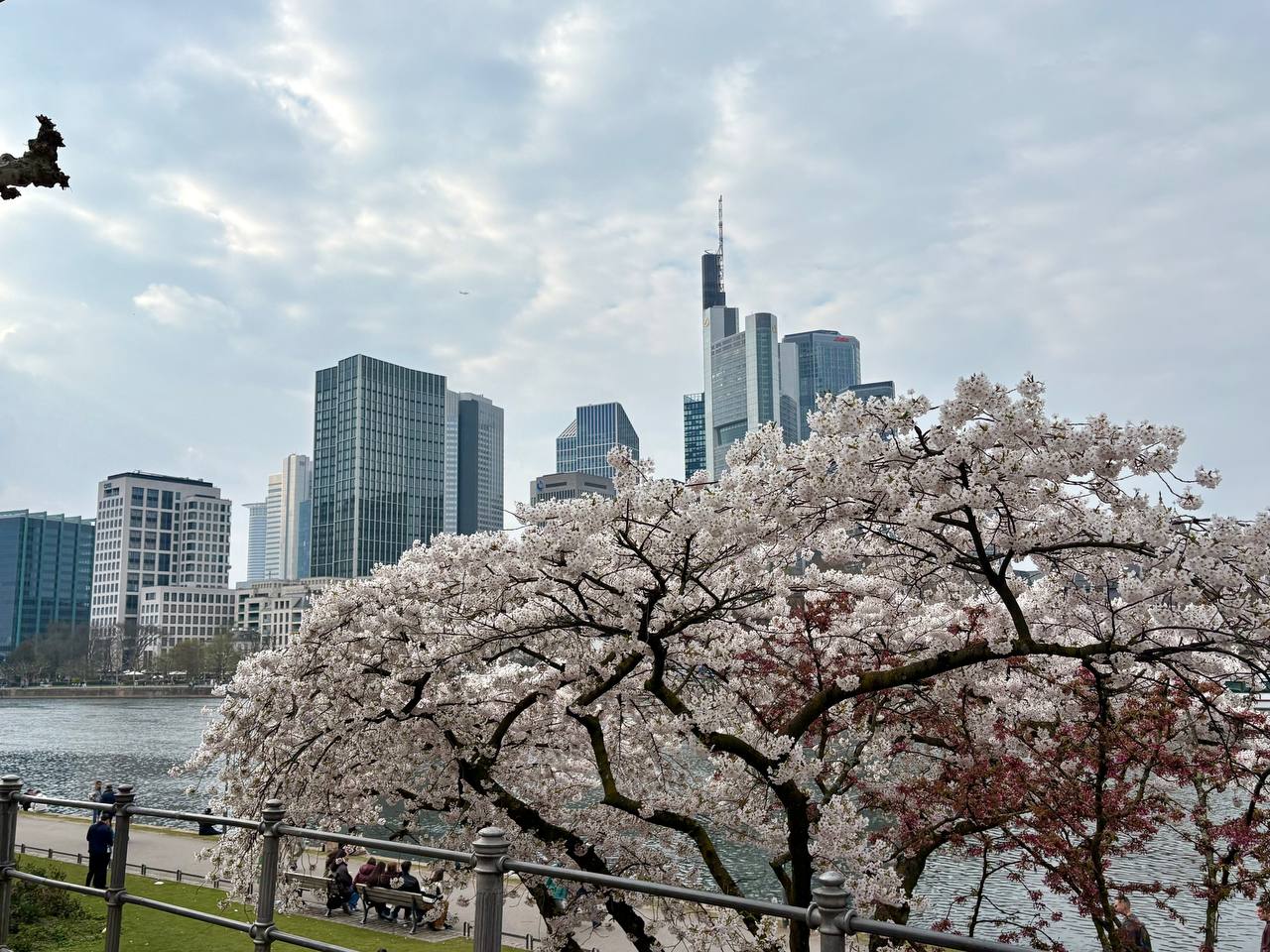
I'm a simple emigrant and I know beautiful places with sakura in Germany
Every spring in German cities, the most beautiful white and pink trees bloom. It seems that absolutely everyone associates them with Japan, and seeing them in Germany feels unusual. Now I'll tell you how this happened, and there will be a surprise — it's at the end. Hamburg. In 1968, Japanese companies and the Hamburg community gifted the city five thousand trees: one for each resident Japanese living there. This was their way of thanking the city for becoming their second home. Moreover, Hamburg is the only European city where the official Japanese Sakura Association selects the Sakura Queen. Only three non-Japanese cities in the world have received such an honor. Berlin. The fall of the Berlin Wall was an emotional moment for everyone. The Japanese TV channel TV Asahi also didn’t stay on the sidelines. In support of a united Germany, they announced a fundraising drive and launched the “Sakura Campaign.” It’s said that even Japanese schoolchildren contributed from their lunches. In the end they raised a million euros and planted 9,000 World Trees in Berlin and Brandenburg. They planted the longest pink avenue right on the former “death strip,” where towers and barbed wire used to stand. The Japanese believed that where the cherry blossoms bloom, there would be no place for war. Düsseldorf. It would be strange not to mention the capital of Japanese culture in Germany, perhaps in all of Europe. In the Pempelfort district and along the famous Immermannstraße, trees were planted for decades to create the atmosphere of a homeland for thousands of Japanese expatriates. The Japanese community, however, gifted the city a Japanese Garden in Nordpark as a symbol of deep friendship. Frankfurt. Since our city is the financial center of Germany, there are many Japanese bankers here. Therefore sakura were planted mainly by locals, but in honor of diplomatic friendship. For example, in Nidda Park the trees appeared to mark the 150th anniversary of friendship between the countries. But in Riedberg a whole avenue was financed by the Japanese bank Mizuho. Bonn. Although here is one of the most famous streets with Japanese cherry trees, the initiative was entirely German. In the 1980s the authorities decided to reconstruct the old town. There wasn’t much money, and the gray and narrow streets needed some liveliness. Then urban planners proposed simply planting sakura along them. And that’s what they did. And after 30 years one of these streets, Heerstraße, made it into the tops of the world’s most beautiful avenues, drawing crowds of tourists. Hanover. This is Hiroshima’s sister city, so in memory of the victims of the atomic bombing, 110 cherry trees were planted in Hanover. Each of them symbolizes 1,000 victims of the Hiroshima tragedy. In general, German cities have grown fond of planting sakura even without special symbolism. Because it’s perfect for urban environments: it’s cheap, grows quickly, but to a moderate height so it doesn’t interfere with power lines or windows, it tolerates pollution well, and its roots don’t significantly damage asphalt. All of this, plus it looks pleasant! And you can admire them with a surprise: I made a map of the most beautiful sakura bloom spots in Germany. Cherry blossoms don’t bloom for long, so go for it! #useful #German_trips