
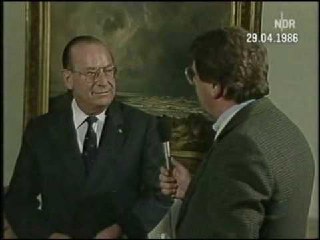
I'm a simple emigrant and I'll tell how Frankfurt experienced Chernobyl
Spring of 1986 was unusually sunny and warm. But for the residents of Frankfurt, and indeed all of Germany, they could not really enjoy the weather. Instead, people sat behind closed windows and watched the news with worry. In the first days there was little information, and it often contradicted itself. The authorities tried to prevent panic, but after a few days it became clear: the radioactive cloud had reached Hesse. After that, concrete measurements were taken and recommendations on how to reduce potential health risk were issued. The main thing they began to fear was rain. It was precipitation that carried radioactive particles to the ground. Parents did not let children run in puddles or on wet grass, and walks in the rain could not be talked about. With any cloud on the horizon, children were sent home. Playgrounds were also subject to restrictions. Children were not allowed to play in sandboxes, as radioactive dust accumulated there, and even building a single sandcastle could be deadly dangerous. Later, on many playgrounds the sand was completely replaced with new. Shoes were the most dangerous item of clothing, and people preferred not to bring them into the house. They were constantly washed and kept in the stairwell. Wet cleaning was also done more often at that time. But the changes were felt most strongly in food. Cow’s milk disappeared from sale immediately. Everything that grew outdoors was better not to eat. Fresh vegetables, lettuce, and spinach were hauled away to the landfill by the ton. In the forests, mushrooms and berries could not be eaten, nor could one hunt wild animals. People were advised to cook only those vegetables that can be peeled. Because of this many stopped buying anything at markets, and some vegetable shops simply went out of business. Even the strawberry season that year had to be skipped. Sometimes in schools outdoor classes were shortened or canceled. The city continued to live, but in daily life a sense of threat settled in, which cannot be seen or felt — only accepted as a given and tried to reduce the risk. Over time the level of radiation decreased, restrictions were gradually lifted, and life returned to its usual course. Although in some southern German cities they still do not advise collecting forest mushrooms. And the experience of 1986 also strongly influenced attitudes toward safety and became one of the reasons for long debates about nuclear energy in Germany. to the video news of that time #history #frankfurt