
I'm a simple emigrant and the Nobel Prize doesn't threaten me
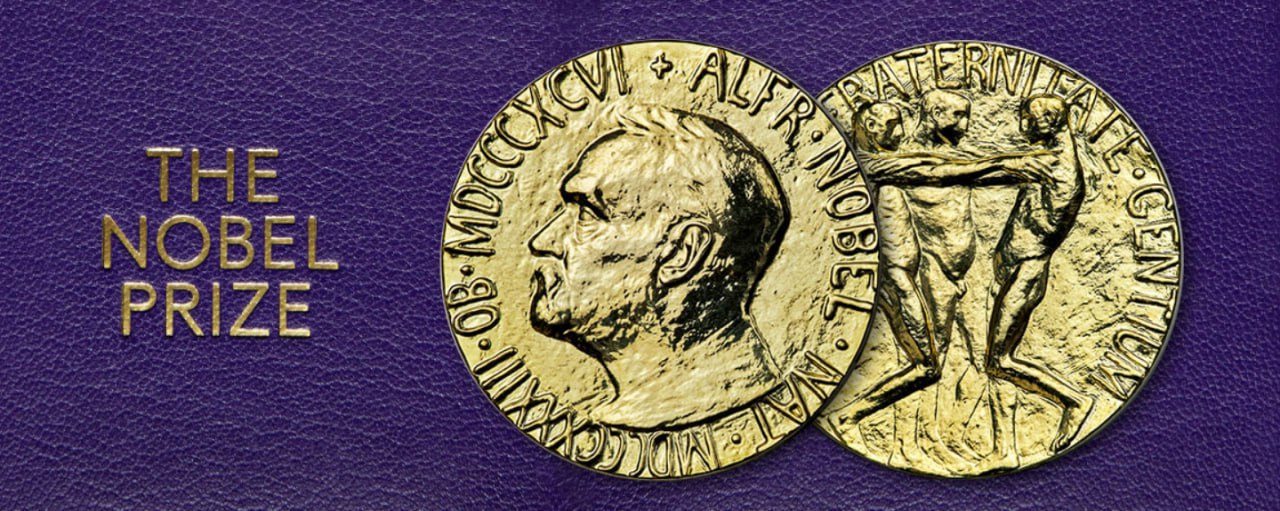
On Friday the Nobel Committee simply published a press release. There, he once again emphasized: the one who received the prize – is the one who remains in history, but the attributes, the medal, the diploma and the money, can be used as you wish. He also mentioned a couple of such cases, but I searched further. It turned out there were many more. Giving a medal or a diploma to museums or organizations is a common phenomenon, and donating money to research and charity is a classic. Many laureates or their families sold medals. But three stories grabbed me more than others. Moreover, I was lucky – they are connected with Germany. I'll start with Albert Einstein. He was so confident in his genius that as early as 1919, at the time of the divorce, he officially stipulated in the contract that he would give the monetary part of the prize to his ex-wife even before he received it. And indeed, three years later he received the Nobel Prize in Physics and kept his word. The darkest story happened a little later. Norwegian writer Knut Hamsun received the Nobel Prize in Literature in 1920 for the novel Growth of the Soil. He was considered one of the greatest authors of the 20th century. Among his admirers were also many colleagues: Mann, Hesse, Hemingway, Gorky. In 1940, after the Nazi occupation of Norway, Hamsun became a fervent supporter of Nazism. He hated Britain and published articles in support of the Germans as “fighters against British tyranny.” In the heat of the war he went to Berlin to Joseph Goebbels. The Reich's chief propagandist was his fan, and the reception was so warm that Hamsun sent Goebbels his golden Nobel medal by mail. In a letter, which is still kept in German archives, he wrote: “I do not know anyone who so tirelessly wrote for the cause of Europe.” For the Nazis this was a jackpot: the holder of the most prestigious prize gave them his medal. True, a couple of years later Hamsun met the Führer and loudly demanded to remove the local dictator from Norway. Hitler, in a fury, threw the writer out the door. After the war Hamsun was tried, but deemed “psychologically degenerate,” and the medal disappeared without a trace. They say it burned in Goebbels' bunker in 1945. My favorite case is the complete opposite. At the same time, in occupied Denmark, at the Niels Bohr Institute, were stored the golden Nobel medals of two German physicists: Max von Laue and James Franck. The regime at that time forbade German citizens to accept the prize; instead they were supposed to dream of the “German National Prize.” But both scientists openly opposed the regime. Therefore Georg de Hevesy, a chemist from the Bohr Institute, came up with a brilliant solution: he dissolved both gold medals in “royal vodka.” He simply placed the orange solution on the shelf. The Nazis thoroughly searched the institute and decided that the medals had disappeared, and their trail went cold. After the war de Hevesy recovered the gold from the solution, handed it over to the Nobel Foundation, and that foundation minted new medals and awarded them to the former holders. The coolest thing is that during this time, in 1943, Georg de Hevesy himself received the Nobel Prize in Chemistry for work with radioactive isotopes. By the way, the man whose name the institute bears, and his son, Aage Bohr — both received this prize. There are truly outstanding minds and talents! For example, I, for one, do not deserve such a prize at all. And how would you dispose of your prize money, diploma or medal? #history photo: Heritage Auctions